
How to Choose the Perfect Poster Size for Your Wall
Choosing the right poster size is just as important as choosing the artwork itself. A beautifully designed travel poster or national park poster can feel lost if it’s too small — or overwhelming if the scale is wrong. Size defines how a travel print lives in a space: whether it quietly complements the room or becomes part of its visual rhythm.
This guide breaks down how to choose the perfect poster size for your wall — based on room type, wall dimensions, furniture, and the emotional role the artwork plays.
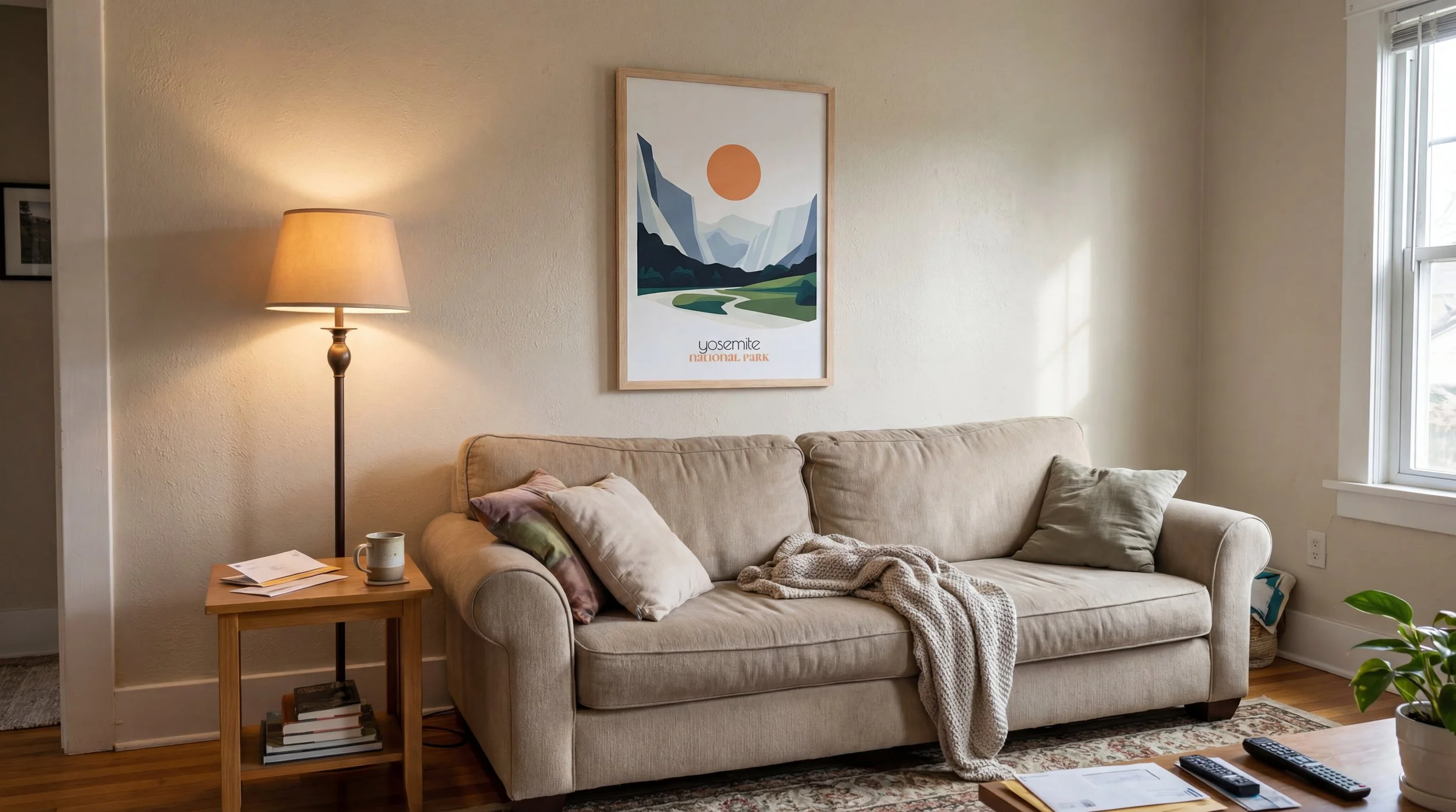
Poster size isn’t about rules. It’s about proportion.
A national park print is not just decoration — it represents space, landscape, and distance. If the size doesn’t match the wall, that sense of scale disappears. A poster that’s too small can feel accidental. Too large, and it can dominate the room instead of integrating into it.
The right size makes a travel poster feel intentional.
Why Poster Size Matters More Than You Think
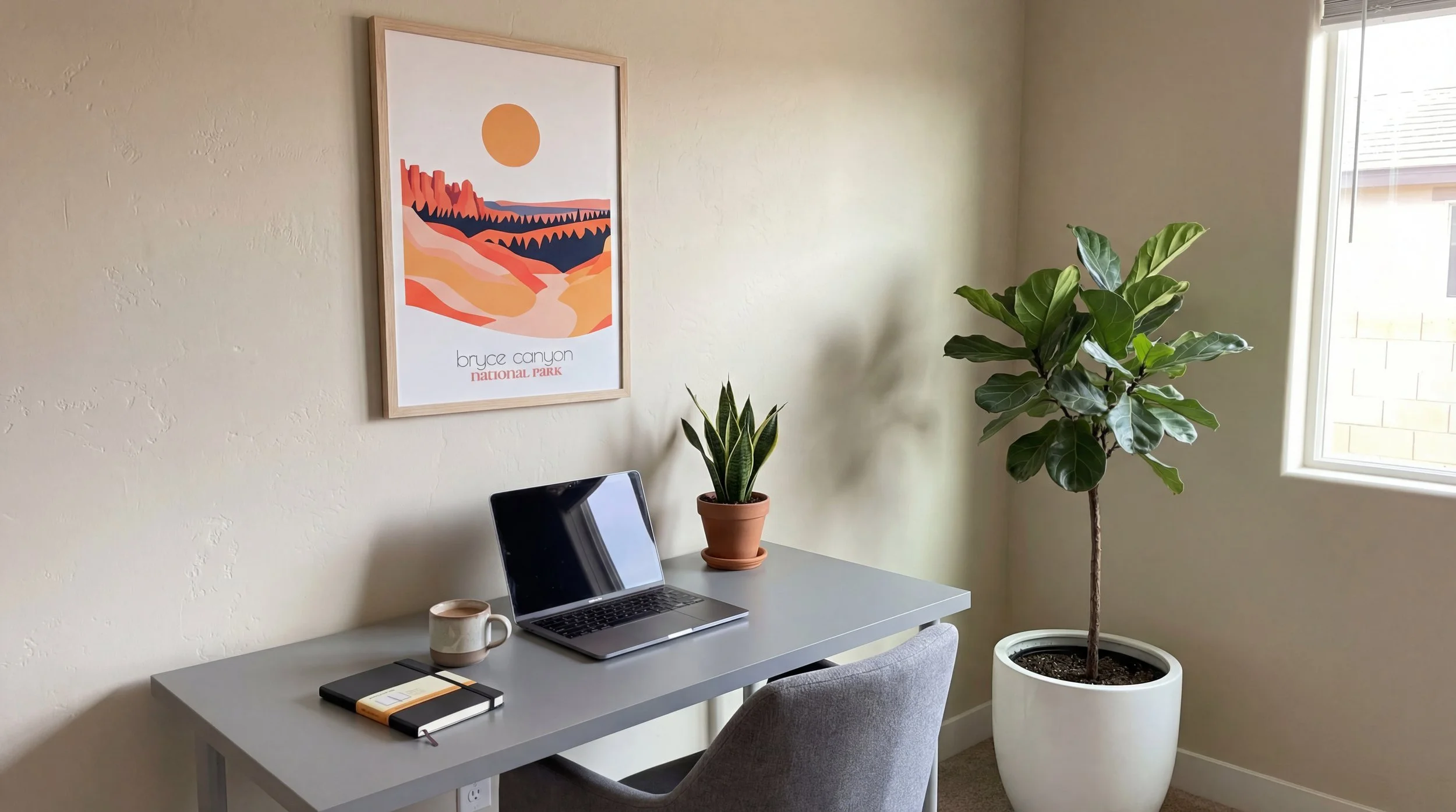
Before choosing a size, measure the available wall space, not the artwork.
A reliable rule:
Your poster (or poster set) should fill 60–75% of the wall width it’s hanging on.
Examples:
Wall width: 120 cm → ideal poster width: 70–90 cm
Wall width: 90 cm → ideal poster width: 50–65 cm
This applies whether you’re hanging:
one large travel poster
two national park posters side by side
or a small collection of prints
Step 1: Measure the Wall, Not the Poster
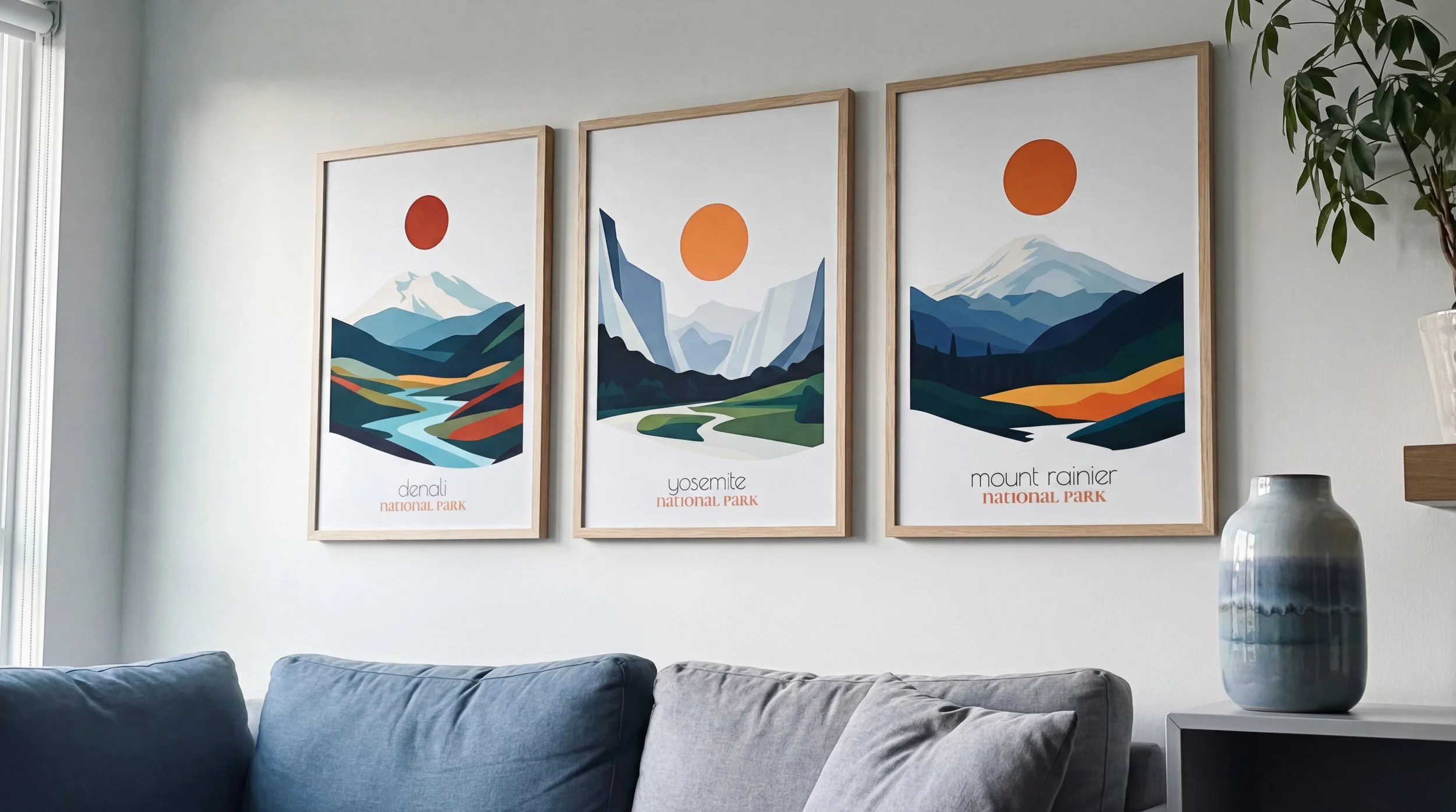
Living Room
Living rooms benefit from medium to large formats. This is where travel posters feel most grounded.
Recommended sizes:
50×70 cm (20×28 in)
60×90 cm (24×36 in)
Large statement sizes above a sofa
A single national park poster works well if it has visual calm. A pair or triptych of travel prints also works if spacing is consistent.
Avoid very small posters — they tend to disappear in larger living spaces.
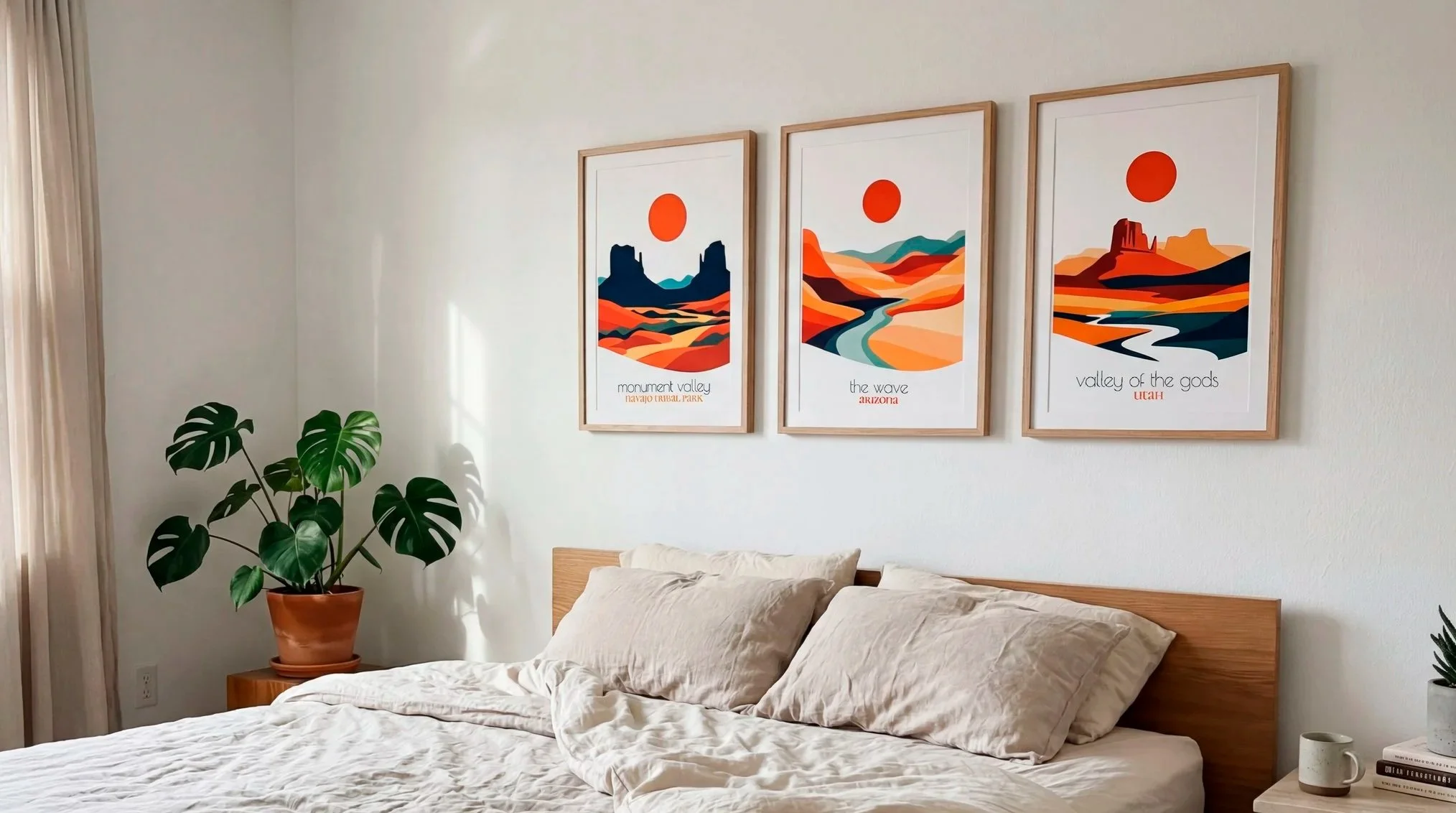
Bedroom
Bedrooms call for balance and restraint.
Recommended sizes:
30×40 cm (12×16 in)
40×50 cm (16×20 in)
50×70 cm above a dresser or opposite the bed
Here, a travel print should support atmosphere, not demand attention. Smaller sizes feel more intimate and personal.
Home Office or Studio
In offices, posters are often closer to eye level — size can be smaller, but still intentional.
Recommended sizes:
30×40 cm
40×50 cm
Vertical formats near desks or shelves
A national park poster in an office often acts as a mental window — a reminder of space beyond the screen.
Step 2: Match Poster Size to the Room Type
A poster should visually relate to what’s below it.
General guideline:
Artwork width should be ⅔ to ¾ of the furniture width
Examples:
Sofa 180 cm wide → poster or set ~120–135 cm total width
Desk 120 cm wide → poster ~70–90 cm wide
If the poster is wider than the furniture, the wall will feel unbalanced.
Step 3: Consider Furniture Proportions
One Large Travel Poster
Best when:
you want a calm, focused composition
the wall is uninterrupted
the poster represents a key place (Yosemite, Yellowstone, Grand Canyon)
Large national park posters emphasize scale and landscape depth.
Two or Three Posters
Best when:
telling a visual story
mixing parks, moods, or color palettes
filling wider walls
Keep sizes identical and spacing consistent (5–8 cm between frames).
Small Collection (4–6 Prints)
Works well in:
hallways
staircases
creative spaces
Smaller travel prints grouped together often feel more personal than a single large statement.
Step 4: One Large Poster or Multiple Prints?
Always remember:
Frame adds visual weight
Matting increases perceived size
A 50×70 cm travel poster with a wide mat can feel closer to a large-format artwork. If your wall is borderline, framing choices can tip the balance.
Step 5: Frame Size vs Poster Size
Poster size works hand in hand with hanging height. In most cases, a travel poster or national park poster feels most natural when its center is close to eye level — roughly 145–155 cm (57–61 inches) from the floor. This applies especially to single prints or small collections. When hanging posters above furniture, the artwork should visually connect to what’s below it, sitting slightly lower rather than floating too high. At eye level, a travel print feels easier to live with — noticed without effort, present without demanding attention.
A Note on Hanging Height
Choosing a poster size before measuring the wall
Hanging small posters too high
Using oversized prints in narrow spaces
Mixing sizes without alignment
Treating travel posters like generic wall art
A national park poster deserves space to breathe.
Common Mistakes to Avoid
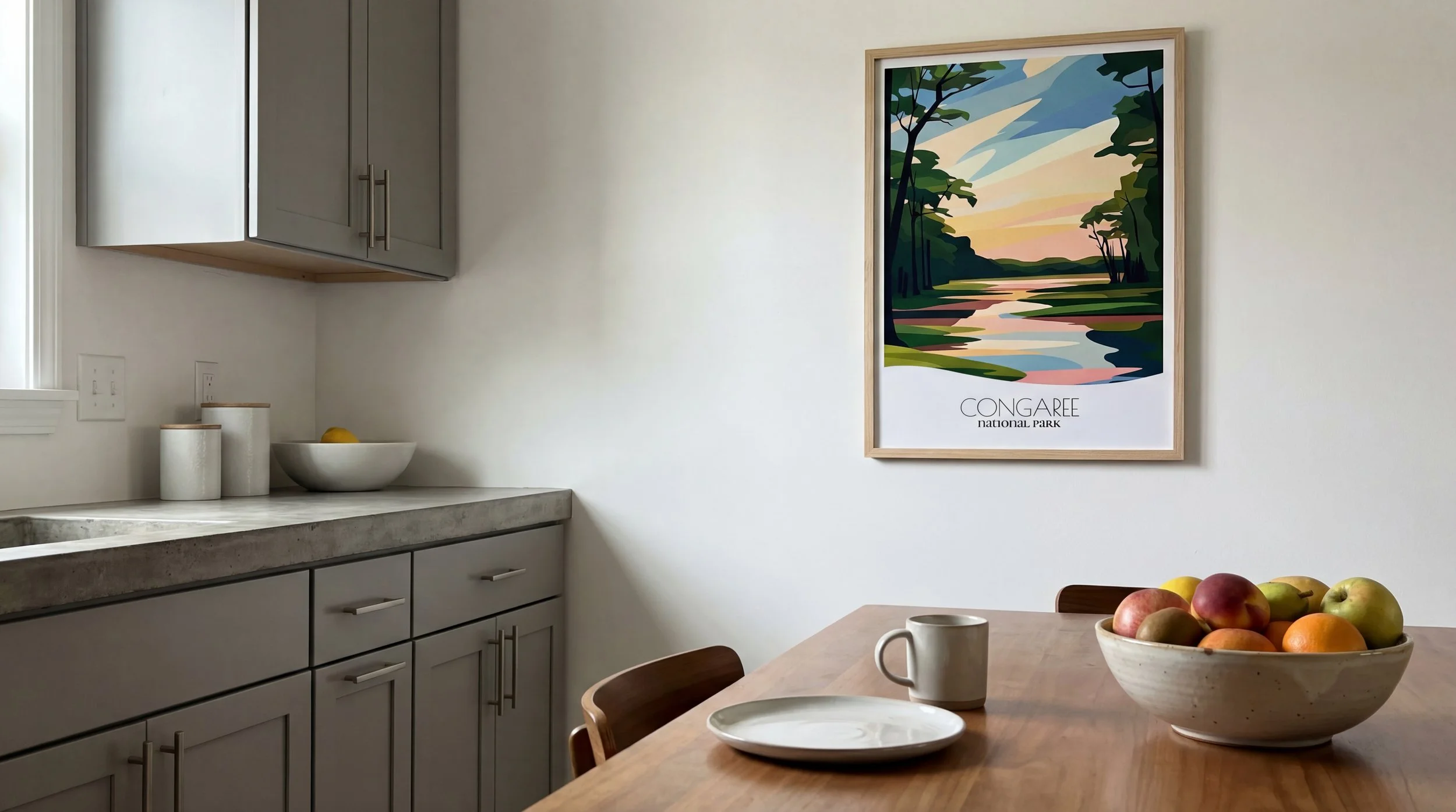
There is no universal “perfect size.”
The right poster size is the one that feels natural in your space — one that belongs there. Whether it’s a large Yosemite-inspired travel poster or a small national park print near your desk, scale is what turns artwork into presence.
When size and space align, the poster stops feeling placed — and starts feeling lived with.